

 Opening Times

For years, wellness holidays promised transformation: better sleep, calmer minds, healthier habits. But our research suggests British travellers are stepping away from labelled “wellness breaks” and choosing something far simpler – holidays that quietly help them recover.
Rather than signing up for spa programmes, sleep courses or meditation retreats, people are looking for trips that reduce effort, ease decision-making and allow them to genuinely switch off. It’s not that wellbeing matters less – in fact, quite the opposite.
Health still matters – but travellers want less pressure
Our latest research into travel intentions for 2026 shows that 96% of UK adults rate health and wellbeing as an important consideration when booking holidays for the year ahead.
To understand what that really means in practice, we polled a nationally representative sample of 2,000 UK adults, exploring the destinations and holiday styles people believe best support their mental health and wellbeing.
The findings reveal a clear shift in how travellers are thinking about rest.
The decline of “wellness-labelled” holidays
Overt wellbeing formats are falling out of favour. Year-on-year, fewer people are choosing holidays that explicitly frame themselves around self-improvement or structured recovery.
- Visiting remote places away from people has fallen sharply, from 35% to 22%
- Spa breaks have decreased from 26% to 19%
- Sleep holidays have dropped from 16% to 12%
Rather than booking trips that feel like another form of work, travellers appear to be opting out of programmes, schedules and expectations altogether.
What travellers are choosing instead
So what’s replacing wellness retreats?
Looking ahead to 2026, the most popular choices are holidays that quietly restore energy and headspace:
- Guaranteed sunshine is now the top choice for 2026 (34%)
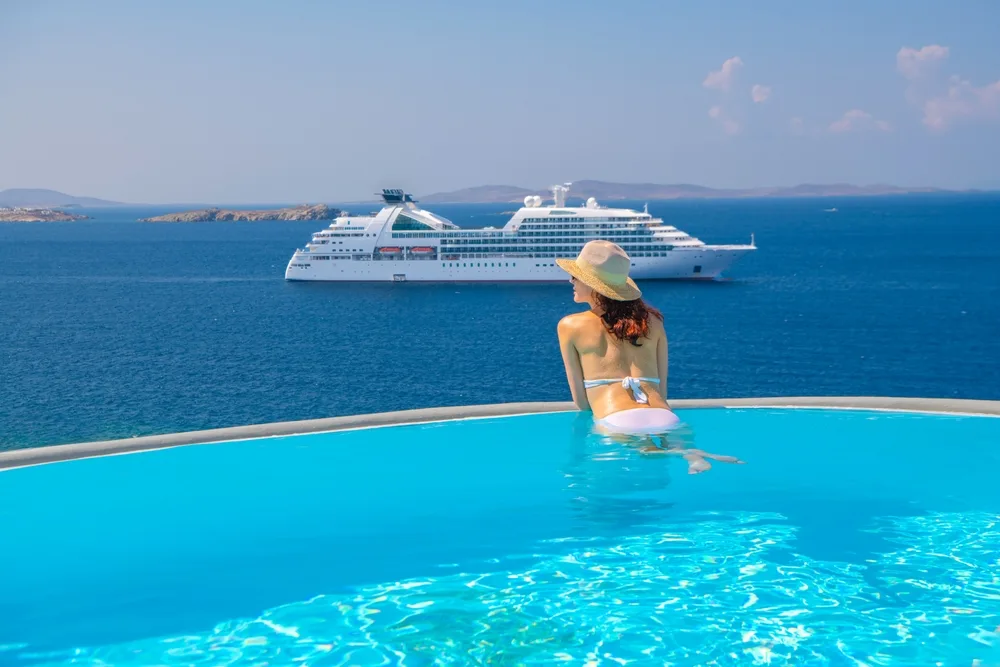
- Cruises have risen from 20% in 2025 to 24% in 2026
- Nature or wildlife retreats remain popular at 28%, slightly down from 30%
- Pet-friendly holidays have jumped from 12% to 16%
- Off-grid breaks and creativity-led holidays are also edging upwards at around 11%
These are trips that remove friction – fewer decisions, fewer demands, and fewer things to organise once you arrive.
Where Brits believe they’ll feel better in 2026
It’s not just the type of holiday that’s changing. The destinations people associate with feeling refreshed and recharged are shifting, too.
While some familiar favourites remain near the top, several more unexpected locations are climbing the wellbeing rankings.
The top wellbeing destinations for 2026 (by percentage of respondents)
- Spain – 23% (down from 25%)
- Italy – 22% (down from 24%)
- Switzerland – 19% (up from 15%)
- Iceland – 17% (up from 12%)
- Japan – 16% (up from 12%)
- Sweden – 15% (up from 8%)
- The Caribbean – 18% (up from 16%)
- Australia – 15% (up from 9%)
- USA – 13% (up from 10%)
- Mexico – 7% (up from 5%)
Outside the top 10, Morocco also rose to 7% (up from 4%) and South Africa increased to 6% (up from 4%).
Domestic destinations, however, have seen notable declines:
- Scotland – 19% (down from 31%)
- Wales – 16% (down from 21%)
Spain remains the most commonly cited destination linked with wellbeing, although its lead is narrowing. Meanwhile, northern European countries and long-haul destinations are gaining momentum, suggesting travellers may be associating space, nature and cultural immersion with feeling better when they return home.
The findings also show that wellbeing remains firmly embedded in travel decision-making. Fewer than one in five respondents (18%) said they could not think of any destination that supports mental health and wellbeing, compared with 15% last year. Just 4% said mental health and wellbeing is not a consideration when planning a holiday.
Recovery, not improvement
Commenting on the findings, Garry Nelson, Head of Corporate Affairs at InsureandGo, said:
“While people continue to care about their mental health – they may simply be tired of holidays that feel like another form of self-work. What we’re seeing is a shift towards recovery rather than improvement. Travellers want breaks that restore energy, support better sleep, and make life feel easier, without programmes, labels or pressures.
At InsureandGo we aim to make it easy – with travel cover that helps people go without the doubt.”
The research suggests this shift is closely linked to everyday pressures at home and work. When life already feels busy and demanding, a holiday that adds structure or expectations can feel counterproductive.
Simplicity is becoming the luxury
Our research suggests that people are increasingly drawn to holidays that reduce demands and decision-making, particularly after periods of routine and pressure.
As Garry Nelson explains:
“Simplicity is becoming central to what makes a holiday feel genuinely restorative. After years of disruption and burnout, holidays are becoming about quiet repair. Sunshine, nature, routine and low-effort travel are doing the heavy lifting.”
In other words, recovery is no longer a specialist add-on – it’s the baseline expectation.
A quieter approach to wellbeing
As 2026 gets underway, our research suggests that British travellers are embracing a more understated but deeply embedded approach to wellbeing. Rather than seeking transformation, they’re prioritising rest. Rather than improvement, they’re choosing recovery.
And rather than calling it “wellness”, they’re simply calling it a holiday.
The research was carried out by UK Omnibus Group in the final week of December 2025 among a nationally representative sample of 2,000 adults. The results are compared to a similar survey conducted in December 2024, also among 2,000 adults.
